When Iran and the United States trade military or political blows, the ripple often lands somewhere unexpected: your gas station bill. The connection runs through the Strait of Hormuz, a narrow shipping lane between Iran and Oman that carries roughly 20% of the world’s oil consumption — about 20 million barrels a day, according to the U.S. Energy Information Administration. Any real or threatened disruption there tends to move oil prices within hours, and Canada isn’t insulated just because it doesn’t import Iranian crude.
A volatile week, in real numbers
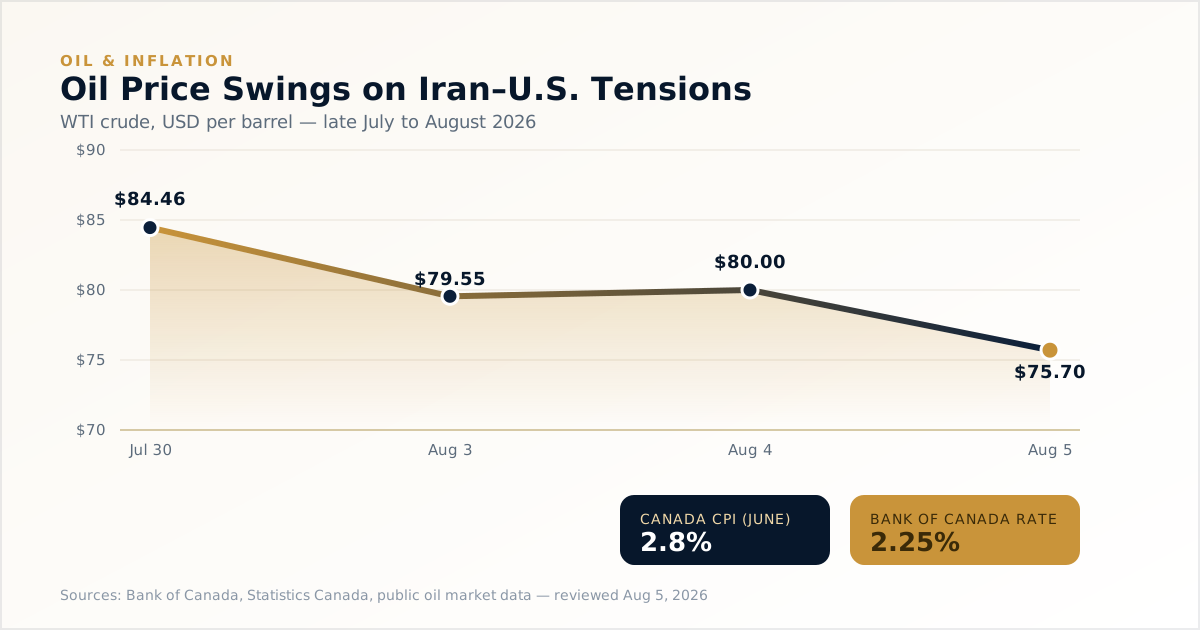
The past week shows how fast this can swing. On July 30, after reports that Iran’s Revolutionary Guard struck U.S. forces, oil jumped 6.6% in a single session to settle near US$84.46 a barrel. By August 3, as both sides appeared to step back, oil had eased about 3.7% to roughly US$79.55. It ticked up slightly to US$80.00 on August 4, then drifted lower again to US$75.70 by August 5 as hopes grew for a resolution over shipping rights through the strait. That’s close to an 11% round trip in under a week — driven almost entirely by headlines, not by any real change in how much oil is being produced or used.
Why it shows up at the pump
Those swings land close to home. Gasoline in Canada was averaging roughly CAD $2.02 a litre for mid-grade fuel in early August (regular runs about 13% cheaper), and that price moves with global oil benchmarks regardless of where the underlying conflict is happening. Higher fuel costs don’t stay contained to the pump, either — they raise the cost of trucking, heating, and manufacturing, and those costs tend to work their way into grocery and retail prices with a lag.
The bigger inflation picture
Despite that pressure, Canada’s broader inflation picture has actually been easing. Annual CPI cooled to 2.8% in June, down from 3.2% in May, even with oil markets whipsawing through the summer. The Bank of Canada held its policy rate at 2.25% on July 15 — its sixth consecutive hold — weighing improving domestic growth against the risk that a sustained oil price spike could reignite inflation. Its next scheduled rate decision is September 2, and how oil behaves between now and then will likely factor into that call.
What this means for your plan
The practical takeaway isn’t to panic every time there’s a new headline out of the Middle East — it’s to build some room for the possibility. Energy costs are one of the more volatile line items in a household or business budget, and a plan that assumes they’ll stay flat is more fragile than one that doesn’t. If rising or unpredictable costs are making it harder to stick to your budget, savings targets, or debt payoff plan, that’s a reasonable moment for a review — not a reason to make a big financial decision based on one week of headlines.
Market and economic figures above are drawn from public third-party sources as of August 5, 2026, and can change quickly or be revised. This article is for general education only and is not personalized financial, investment, or tax advice.
Want to talk through this?
Start with a 30-minute session or protection review. No guaranteed outcomes are promised; the goal is to understand your situation and possible next steps.
Book a 30-Minute Session Related: Explore our financial planning services